
What Marfa Actually Looks Like From the Inside
Not the Marfa of art tourists and Instagram. The actual town — before and after everything changed — from someone who was born there and never left.The weeping woman isn't just a river ghost. In West Texas, she walks the arroyos and the dry creek beds — and she's been here longer than the border.
Leslie L. Stevens
2/1/20254 min read
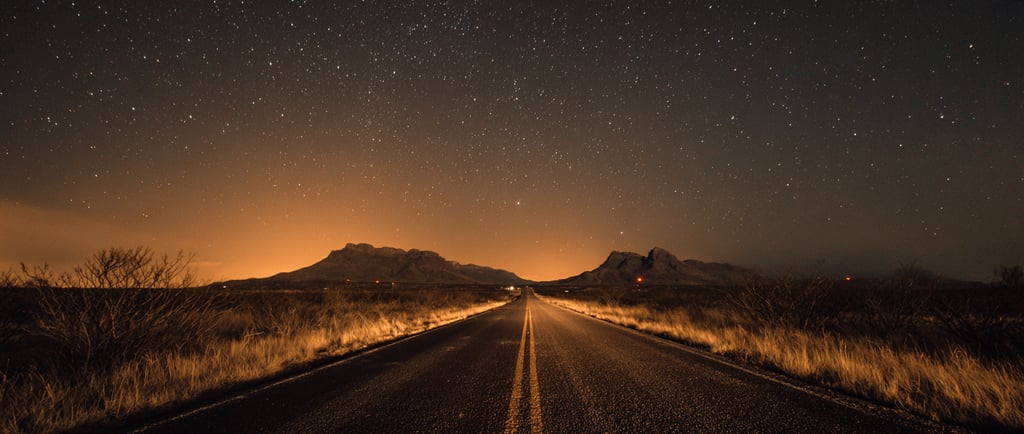
At sixteen I used to climb out my window after dark with my Walkman, walk down past the railroad tracks by my house, and sit on the cement slab on the empty lot at the end of the road. Eleven o'clock at night, Skid Row in my ears, a cigarette going, and not another soul anywhere. No headlights. No voices. Nothing.
That slab is the Crowley Theater now.
That's the thing about Marfa that nobody who discovered it later can quite understand. They see what it became and they assume there was always something here worth seeing. There wasn't. There was a small West Texas town where kids cruised up and down the highway all day because there was nothing else to do, where we cut school and sat under the bridge and smoked, where Saturday night meant the Dairy Queen parking lot or someone's house party and that was the full range of options. It was quiet in a way that felt like it would last forever. It felt like nothing.
I didn't know then that nothing was something.
I started working at Hotel Paisano around 2001. By then the town was already different. Two men had leased the old restaurant space in the hotel — a spot the owners had never renovated — fixed it up themselves, and opened Jett's Grill. They named it after James Dean's character in Giant. The cast had stayed at the Paisano while filming it. That history was right there in the walls the whole time, and now someone was finally doing something with it. It was the first real fine dining Marfa had ever seen.
Every year after that the owners would say we made more this year. And then the year after that, more again — until we were laying on the floor after service because the tickets had come so hard and so fast that our bodies just quit when it was finally over.
I was bartending through some of that. Tourists would sit across the bar and ask me what it was like growing up here. I'd tell them — the highway, the bridge, the Dairy Queen, nothing much. Their eyes would light up like I was describing something extraordinary. They were paying a lot of money to be in a place that felt like the edge of the world, and here was a woman who'd grown up on that edge and didn't think anything of it. I had what they came looking for and I'd been trying to leave it behind my whole life.
I need to tell you about the men who opened Jett's.
I came to them with nothing. I had two young boys — Adam was five, Zach was nine — and I'd just come out of a divorce with no degree and no prospects and no idea what I was doing. I walked in and asked for a job. They hired me with zero experience and put me in the kitchen chopping and prepping.
What happened after that I still don't fully understand except to say that they believed in me before I believed in myself. Every time I learned something new, every time I got better at something, they saw it — the way parents see their kid figuring something out and can't quite hide how proud they are. They gave me raises every few months. They saw when the head chef was taking advantage of me and they did something about it. When they sold the business to the hotel owner, who planned to keep only one person on, they told him I was part of the package. Non-negotiable.
I didn't know that was happening. I thought I was about to be laid off. I was terrified.
They told me: Don't be scared. You've been doing his job this whole time.
By 2003 I was running the kitchen. I was executive chef before I was thirty, in a town that barely had restaurants when I was a kid, in a kitchen I'd walked into asking for any work they'd give me.
When they sold the business I cried. I'm close to crying right now writing this. Everything that came after — the career, the knowledge, the life I was able to build — ran through that moment when they decided I was worth betting on. My boys grew up watching me work that kitchen. I gave them their first jobs there. They are both chefs now. Damn good ones.
If Marfa had stayed the way it was when I was sitting on that cement slab at sixteen, none of that happens. The transformation that old-timers sometimes resent — it is also, directly and specifically, the reason my sons have careers and I have a life. I know that. I hold both things at once.
A few years after I moved from the bar to the kitchen, a woman came in and asked for me by name. I didn't recognize her. She and her husband had been in years back — seven years, maybe more — celebrating an anniversary. I'd been their bartender that night. They'd never forgotten it. She had a photo of the two of us.
I still drive past my spots sometimes. Past the railroad tracks. Past where Jett's used to be. I can still see it exactly as it was — the empty slab, the dark, sixteen years old and alone with my Walkman and the whole quiet desert around me.
We thought we had nothing. We hated it. We couldn't wait to have more.
I think we got more out of childhood than most do.
Leslie L. Stevens was born and raised in Marfa, Texas. She is the author of What October Woke and PAGE GRIMM: Modern Dark Folklore, published under her imprint Nightwork Press.